Wabash County Dog Registration Information
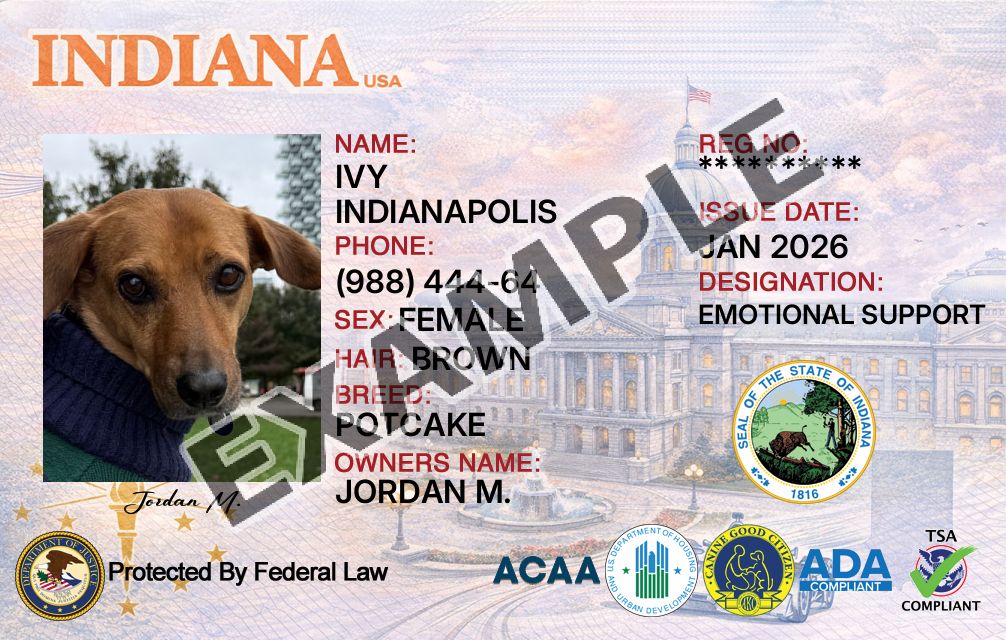
Service Dogs and Emotional Support Animals in Wabash, Indiana
If you’re searching “where do I register my dog in Wabash County, Indiana for my service dog or emotional support dog,” you’re usually looking for two different things: (1) the local dog license (sometimes called a rabies tag or county/city license), and (2) rules about service dogs or emotional support animals (ESAs). In Wabash County, dog licensing and animal services are handled locally, and the right place to contact can depend on whether you need licensing guidance, help with an animal control issue, or shelter services.
Where to Register or License Your Dog in Wabash County, Indiana
The offices below are official, locally relevant points of contact for Wabash County residents seeking dog licensing direction, animal services, or shelter/animal control support. If you’re unsure which one applies to your address, start with the County Treasurer for licensing questions and the Animal Shelter for animal services questions.
Wabash County Treasurer’s Office
- Phone: (260) 563-0661 Ext. 1259
- Email: treasurer@wabashcounty.in.gov
- Office Hours: 8:00 a.m. – 4:00 p.m. (Monday–Friday)
Wabash County Animal Shelter
- Phone: (260) 563-3511
- Email: wabashsheltermgr@gmail.com
- Hours: Mon/Wed/Fri 12:00 p.m. – 6:00 p.m.; Tue/Thu Closed; Sat/Sun 12:00 p.m. – 4:00 p.m.
Overview of Dog Licensing in Wabash County, Indiana
What “registering your dog” usually means locally
In most Indiana counties, “registering” a dog means obtaining a dog license (often a numbered tag) tied to your household and your dog’s rabies vaccination record. A dog license in Wabash County, Indiana may be required by local ordinance, especially for dogs that are old enough to require a rabies vaccination. Even when people ask about registering a service dog or emotional support dog, the local process is typically still the same dog licensing process used for all dogs.
Why dog licensing exists
- Public health: supports rabies vaccination compliance and recordkeeping.
- Identification: helps return lost dogs faster.
- Local enforcement: helps animal control and shelters identify ownership and address community safety concerns.
County vs. city rules
Wabash County residents may be subject to county-wide requirements and, if within a municipality, possible city/town requirements. The most reliable way to confirm dog licensing requirements in Wabash County, Indiana for your exact address is to call the official offices listed above and ask what rules apply in your jurisdiction (county-only or city-specific).
What You Need Before Registering a Dog
Common documents and information
While dog licensing requirements can vary by jurisdiction, most local licensing offices ask for proof that your dog is currently vaccinated against rabies and that you are the owner/handler responsible for the dog at your address.
- Rabies vaccination certificate from a veterinarian (current/valid dates matter).
- Your ID (driver’s license or other identification).
- Proof of residency (if requested) showing your Wabash County address.
- Spay/neuter documentation (if applicable and if fees differ based on sterilization status).
- Dog details such as name, breed/description, color, age, sex.
Service dog or ESA paperwork: what’s relevant locally
For local dog licensing, the most important paperwork is typically rabies vaccination proof. Being a service dog or emotional support animal generally does not replace basic public health requirements. If you’re requesting a fee exemption or a specific designation under local rules, ask the licensing office what documentation they accept (and keep expectations practical—many places do not issue a special “service dog license” separate from a standard dog license).
Steps to Register or License a Dog in Wabash County, Indiana
Step-by-step process (typical local workflow)
-
Confirm the correct licensing office for your address.
Start with the Wabash County Treasurer’s Office to ask where licensing is handled and whether your municipality has additional rules.
-
Make sure your dog’s rabies vaccination is current.
A current rabies certificate is commonly required to obtain or renew a dog license.
-
Gather your documents.
Bring vaccination proof and any required identification or residency documentation.
-
Apply and pay any required fee.
Fees, accepted payment methods, and renewal schedules can vary, so verify by phone before you go.
-
Keep the license/tag information available.
Many jurisdictions expect the tag to be attached to the collar when the dog is off your property.
If you’re licensing a service dog or emotional support dog
The local dog licensing process is usually the same as for other dogs: you license the animal with the local government using rabies vaccination proof. Service dog status and ESA status are legal classifications that impact where the animal can go and what accommodations apply—but they generally do not create a separate “registration” that replaces a local dog license in Wabash County, Indiana.
Service Dog Laws in Wabash County, Indiana
What makes a dog a service dog
A service dog is generally a dog that is trained to perform specific tasks for a person with a disability. The task training is what distinguishes a service dog from a pet or comfort animal. Service dogs are typically allowed in public places where pets are not allowed, as long as they are under control and housebroken.
No universal federal service dog registry
There is not one federal government registry that “registers” service dogs for public access rights. In daily life, you usually demonstrate a service dog’s legitimacy through the dog’s behavior and task-related purpose rather than a government-issued registration card.
How this interacts with dog licensing requirements
- Local licensing is separate from service dog access rights.
- Rabies vaccination and other public health rules can still apply.
- If you’re asked for licensing info by local authorities, having your dog license and rabies records organized can reduce confusion.
Emotional Support Animal Rules in Wabash County, Indiana
What an emotional support animal (ESA) is—and is not
An emotional support animal provides comfort and support through companionship. Unlike a service dog, an ESA is not defined by task-specific training for a disability. ESAs may be relevant primarily in housing contexts where accommodations can apply.
No universal government ESA registration
Like service dogs, ESAs are not established through a single universal government registration system. If you are trying to “register” an ESA, what you likely need is: (1) compliance with local dog licensing requirements in Wabash County, Indiana, and (2) the appropriate documentation required by a housing provider if you are requesting an accommodation.
ESAs and public access
ESAs generally do not have the same public access rights as service dogs. Even if your dog is an ESA, you may still need to follow standard rules for pets in businesses, restaurants, and other public spaces—while still completing any animal control dog license requirements in Wabash County, Indiana that apply to all dogs.
Dog License vs. Service Dog vs. Emotional Support Animal (ESA)
| Dog License (Local) | Service Dog | Emotional Support Animal (ESA) | |
|---|---|---|---|
| What it is | A local government license/tag that identifies a dog and supports rabies compliance. | A dog trained to perform disability-related tasks for a handler. | An animal that provides comfort/support through companionship (not task-trained in the same way). |
| Who issues/recognizes it | Local office (county or city, depending on jurisdiction). | Recognized under disability laws based on task training and disability-related need (not a single registry). | Typically relevant for housing accommodations; not a universal registry-based status. |
| Typical paperwork | Rabies vaccination proof; application details; possible fee/payment. | No universal registration required; handler typically maintains training and vaccination records. | Often housing-related documentation; still must comply with local vaccination/licensing rules. |
| Public access (pets not allowed) | No (a license alone does not grant access). | Generally yes, when the dog is under control and housebroken. | Generally no. |
| Where to start in Wabash County | County Treasurer’s Office (for licensing direction). | License the dog locally if required; follow service dog conduct and control expectations. | License the dog locally if required; address ESA needs mainly through housing policies and applicable laws. |
Frequently Asked Questions
Do service dogs have to be licensed in Wabash County, Indiana?
Many jurisdictions treat service dogs like other dogs for basic public health requirements such as rabies vaccination and licensing. To confirm what applies at your address, contact the Wabash County Treasurer’s Office and ask about dog licensing requirements in Wabash County, Indiana for service animals.
Is there a county “service dog registration” office in Wabash County?
Local offices typically handle dog licensing, not a special universal service dog registry. Service dog status is generally based on disability-related need and task training, not a county-issued registration certificate.
What proof do I usually need to get a dog license in Wabash County, Indiana?
Proof of rabies vaccination is commonly required for a dog license. Additional documentation (like proof of residency, ID, or spay/neuter records) may be requested depending on local rules and fee structure.
Who should I call for animal control-type issues in Wabash County?
For many animal services concerns (stray/lost pets, shelter intake questions, and related issues), the Wabash County Animal Shelter is a practical starting point. For licensing-specific questions, start with the County Treasurer.
What if I live in a city within Wabash County?
Some cities and towns have additional ordinances or may direct residents to a specific local process. If you’re not sure whether your dog license is handled by the county or your municipality, call the Wabash County Treasurer’s Office and confirm based on your address.
What You May Need
Local clarity checklist
- Confirm whether your address uses county licensing or city-specific rules.
- Ask what documentation is required for a new license vs. renewal.
- If you’re calling about a service dog or ESA, be specific: “I need the local dog license process” vs. “I need information about access/accommodation rules.”
Register A Dog In Other Indiana Counties
Select your county below to get started with your dog’s ID card. Requirements and license designs may vary by county, so choose your location to see the correct options and complete your pup’s registration.
- Adams County Dog Registration
- Allen County Dog Registration
- Bartholomew County Dog Registration
- Benton County Dog Registration
- Blackford County Dog Registration
- Boone County Dog Registration
- Brown County Dog Registration
- Carroll County Dog Registration
- Cass County Dog Registration
- Clark County Dog Registration
- Clay County Dog Registration
- Clinton County Dog Registration
- Crawford County Dog Registration
- Daviess County Dog Registration
- Dearborn County Dog Registration
- Decatur County Dog Registration
- DeKalb County Dog Registration
- Delaware County Dog Registration
- Dubois County Dog Registration
- Elkhart County Dog Registration
- Fayette County Dog Registration
- Floyd County Dog Registration
- Fountain County Dog Registration
- Franklin County Dog Registration
- Fulton County Dog Registration
- Gibson County Dog Registration
- Grant County Dog Registration
- Greene County Dog Registration
- Hamilton County Dog Registration
- Hancock County Dog Registration
- Harrison County Dog Registration
- Hendricks County Dog Registration
- Henry County Dog Registration
- Howard County Dog Registration
- Huntington County Dog Registration
- Jackson County Dog Registration
- Jasper County Dog Registration
- Jay County Dog Registration
- Jefferson County Dog Registration
- Jennings County Dog Registration
- Johnson County Dog Registration
- Knox County Dog Registration
- Kosciusko County Dog Registration
- LaGrange County Dog Registration
- Lake County Dog Registration
- LaPorte County Dog Registration
- Lawrence County Dog Registration
- Madison County Dog Registration
- Marion County Dog Registration
- Marshall County Dog Registration
- Martin County Dog Registration
- Miami County Dog Registration
- Monroe County Dog Registration
- Montgomery County Dog Registration
- Morgan County Dog Registration
- Newton County Dog Registration
- Noble County Dog Registration
- Ohio County Dog Registration
- Orange County Dog Registration
- Owen County Dog Registration
- Parke County Dog Registration
- Perry County Dog Registration
- Pike County Dog Registration
- Porter County Dog Registration
- Posey County Dog Registration
- Pulaski County Dog Registration
- Putnam County Dog Registration
- Randolph County Dog Registration
- Ripley County Dog Registration
- Rush County Dog Registration
- Scott County Dog Registration
- Shelby County Dog Registration
- Spencer County Dog Registration
- St. Joseph County Dog Registration
- Starke County Dog Registration
- Stueben County Dog Registration
- Sullivan County Dog Registration
- Switzerland County Dog Registration
- Tippecanoe County Dog Registration
- Tipton County Dog Registration
- Union County Dog Registration
- Vanderburgh County Dog Registration
- Vermillion County Dog Registration
- Vigo County Dog Registration
- Warren County Dog Registration
- Warrick County Dog Registration
- Washington County Dog Registration
- Wayne County Dog Registration
- Wells County Dog Registration
- White County Dog Registration
- Whitley County Dog Registration